Vincent van Gogh · Starry night
1889 – Oil on canvas – MoMA New York
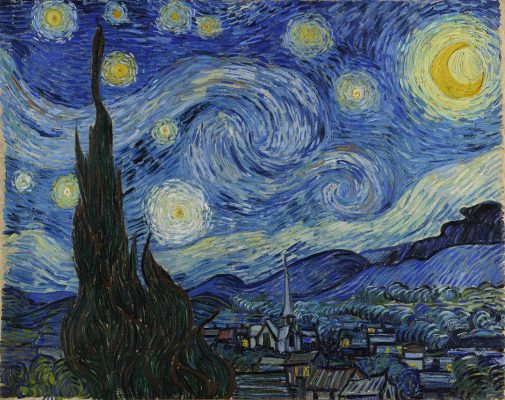
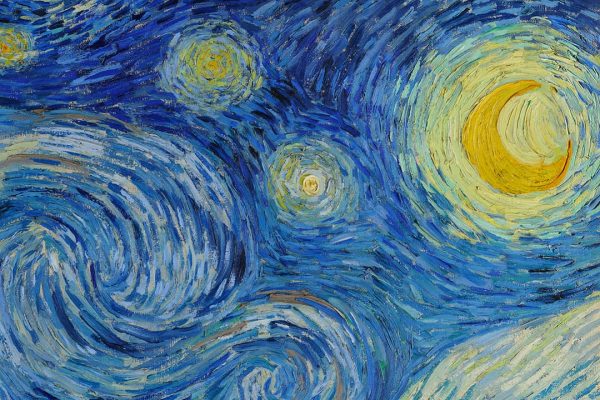
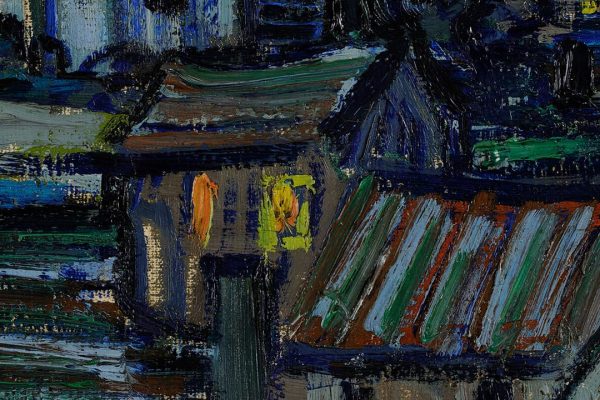
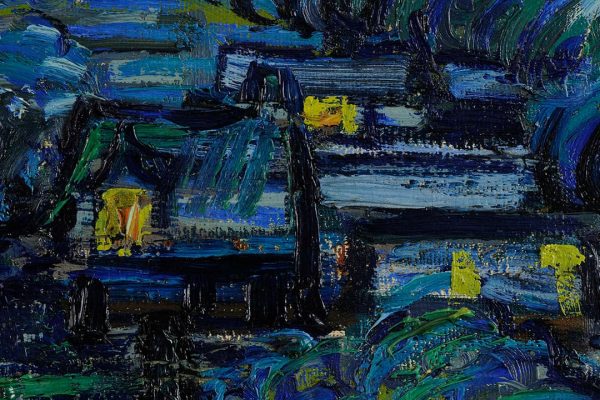
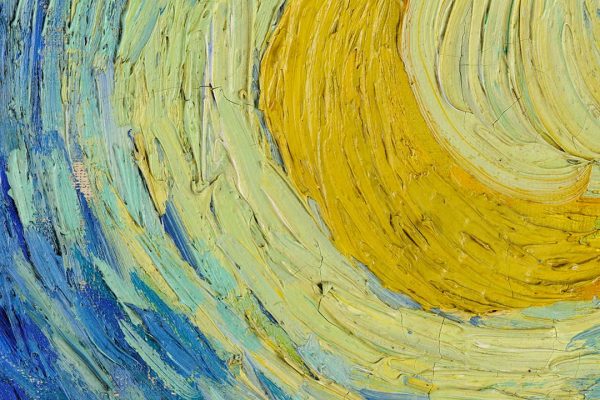
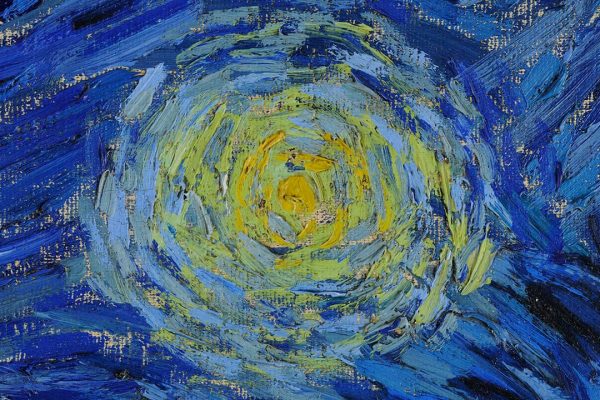
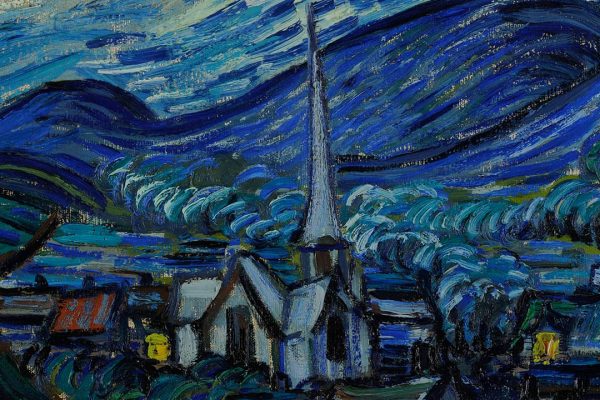
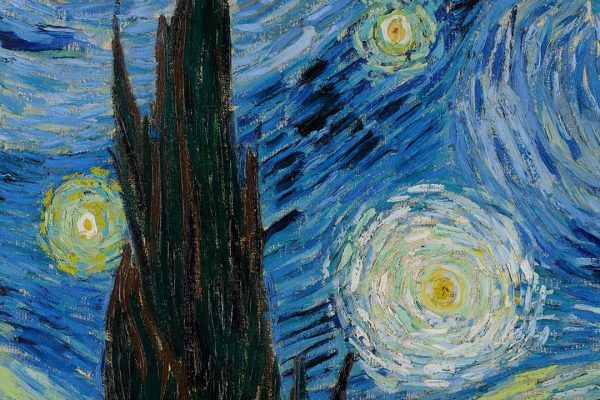
One of van Gogh’s most brilliant and famous works, commonly associated to his increasing insanity, and that actually was the result of the artist’s interest for the astronomical investigations.
In fact, in this painting we can observe either real and fantastic elements. On the first hand, a study made by the Griffith Park Observatory demonstrated that Van Gogh represented the Moon, Venus, and several stars in the exact position they occupied that clear night. On the other hand, the showy spiral that occupies great part of the work is clearly a fantastic element, which can be seen as the artist’s interpretation of the invisible astronomical phenomena that take place in the firmament, which were discovered in the 19th century.
Tsukasa Kodera (1990) notes that the contrast between the church’s tower and the spectacular effects of the firmament can be interpreted as a critic towards the religious institution, which looks ridiculous when compared with nature. More evident it is the contrast between this tower and the enormous cypress, which for Van Gogh was a symbol of death.
Text: G. Fernández, theartwolf.com
Follow us on: