Michelangelo Buonarroti (1475-1564)
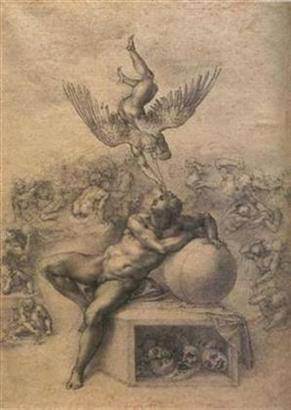
The Dream of Human Life, c. 1533
Black chalk, 39.4 x 27.7 cm
The Courtauld Gallery, London
Michelangelo’s Dream at the Courtauld Gallery
Michelangelo’s masterpiece The Dream (Il Sogno) has been described as one of thefinest of all Renaissance drawings, and it is amongst The Courtauld Gallery’s greatesttreasures. Executed in c. 1533 when Michelangelo Buonarroti (1475-1564) was at theheight of his career, it exemplifies his unrivalled skill as a draughtsman and hisextraordinary powers of invention. Michelangelo’s Dream examines this celebratedwork in the context of an exceptional group of closely related drawings byMichelangelo, as well as original letters and poems by the artist and works by hiscontemporaries.
18 February to 16 May 2010
]]>
Source: Courtauld Gallery
The Dream is one of Michelangelo’s ‘presentation drawings’, a magnificent andfamous group of highly refined compositions which the artist gave to his closestfriends. These beautiful and complex works transformed drawing into an independentart form and are amongst Michelangelo’s very finest creations in any medium. TheDream was probably made for a young Roman nobleman called Tommaso de’Cavalieri, who was celebrated for his outstanding beauty, gracious manners andintellect. Michelangelo had first met him in Rome in the winter of 1532 and hadinstantly fallen in love. The Dream is likely to have been part of the superb group ofdrawings which Michelangelo gave to Cavalieri during the first years of their closefriendship. This group forms the heart of the exhibition and includes The Punishmentof Tityus, The Fall of Phaeton, A Bacchanal of Children and TheRape of Ganymede. In his Life of Michelangelo (1568) the biographer and artistGiorgio Vasari praised these exceptional works as ‘drawings the like of which havenever been seen’ – and they are still regarded as amongst the greatest single seriesof drawings ever made.
Michelangelo’s drawings for Cavalieri have not been seen together for over twentyyears and this is the first time that The Dream will be shown as part of this group.Exceptionally also, The Fall of Phaeton will be reunited with two earlier versions ofthis composition. Both carry inscriptions in Michelangelo’s hand, onerequesting Cavalieri’s approval of the preliminary design.
The exhibition starts with the earliest surviving letter from Michelangelo to Cavalieri,dated 1 January 1533, in which the artist expresses his delight that Cavalieri hadagreed to accept the gift of some drawings. Cavalieri is thought to have been noolder than 17 at the time and, according to Vasari, Michelangelo’s gifts were primarilyintended to teach him how to draw. The mythological stories such as Phaeton fallingto earth with the chariot of the sun, the abduction of Ganymede – the most beautiful ofmortals – and the punishment of the lustful giant Tityus may also have been intendedto offer moral guidance. The drawings certainly also served as expressions ofMichelangelo’s love for Cavalieri.
Follow us on: